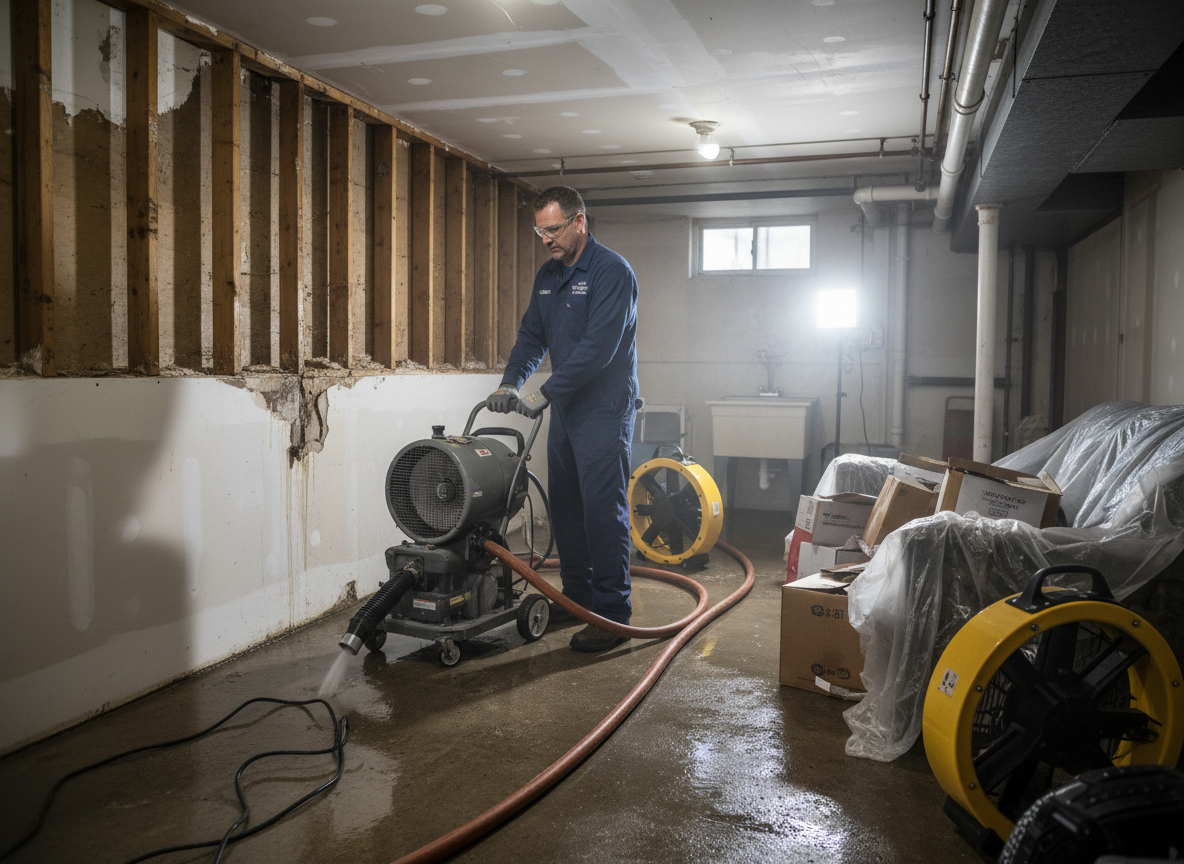
Water leaks in Yonkers often start in older cast-iron or galvanized lines common in pre-1960 homes around Getty Square and Lincoln Park. Once a pinhole forms, water travels along joists and into finished basements because of the area's hilly terrain. Technicians must pull baseboards and use moisture meters on multiple levels rather than assuming the wet spot is the source. Freezing nights along the Hudson can expand a small crack overnight, turning a drip into standing water against foundation walls.
Drying after a leak requires more than fans in these tight, stone or brick basements. Equipment must account for Yonkers winters when outdoor air is too cold to help dehumidification. We place air movers to create negative pressure that pulls moisture from plaster and lath without collapsing weakened ceilings. If the leak reached subflooring, we check for delamination in the plywood layers that older homes often have, because trapped moisture there leads to cupping floors weeks later.
Edge cases include leaks behind tile in 1920s bathrooms where the original lead or copper supply lines run inside exterior walls. Removing only the visible wet drywall leaves insulation saturated against the sheathing. In those situations we open the wall from the exterior side when possible to avoid destroying original tile work that homeowners want to keep. Every job ends with a written moisture log so the homeowner can see exactly which rooms reached dry standard before we close the walls.
Technician insight
In Yonkers the thing that catches most people out with water leak restoration is how quickly moisture travels downward through the hill lots in neighborhoods like Crestwood; a leak on the upper floor can saturate finished basement walls two stories below before anyone notices, and the old balloon framing lets it spread fast once it hits the studs.
Burst Supply Line in a Lincoln Park Basement
A homeowner noticed damp carpet near the laundry room after a cold snap. We traced the leak to a corroded galvanized line running under the first-floor bathroom. After extracting water and drying the joist bays we replaced the damaged subfloor section and the affected drywall without disturbing the original kitchen above.
How it works
- 1
On-Site Assessment
We arrive within hours, locate the leak source with cameras and meters, and map all affected materials in Yonkers homes.
- 2
Water Extraction
Standing water is removed with portable pumps and wands to prevent further migration through the home's lower levels.
- 3
Drying and Monitoring
Industrial dehumidifiers and air movers run until moisture readings return to normal, with daily checks logged for the homeowner.
- 4
Repair and Restoration
Damaged drywall, insulation, and flooring are replaced and finished to match existing surfaces.
Pricing
Pricing depends on leak location, how many rooms are affected, and whether structural materials must be opened; we give a clear written scope before work begins.