Yonkers homes built before 1960 often feature plaster walls, lathe construction, and basements that sit close to the water table near the Saw Mill River and Bronx border. When water enters through foundation cracks or sewer lines, it travels along joists and into wall cavities that standard fans cannot reach. Mitigation crews must pull baseboards, drill weep holes, and use moisture meters on multiple layers to confirm the full extent before any drying begins.
Spring snowmelt combined with sudden nor'easters sends water through the clay-heavy soils common in Crestwood and Getty Square. This creates hydrostatic pressure that pushes moisture up through slab joints and into finished lower levels. Technicians place air movers at floor level and run dehumidifiers on high for extended cycles because the dense soil retains water longer than sandy soils found farther north in Westchester.
Electrical systems in Tuckahoe Road area homes frequently run through finished basements. Mitigation requires shutting off power at the panel before extraction and using non-conductive equipment to avoid shorts. Crews document every affected circuit and leave temporary power plans with homeowners so restoration can proceed safely once moisture levels drop below 15 percent.
After water removal, antimicrobial application targets hidden growth in subflooring. In Yonkers row houses, shared walls mean crews must check adjoining units for odor migration. Leaving any damp cellulose insulation behind leads to recurring musty smells that homeowners notice months later when humidity rises again.
Technician insight
In Yonkers, the thing that catches most people out with water damage mitigation is the clay soil around older foundations near the Saw Mill River. Water sits against the concrete for weeks after the rain stops, so homeowners think the job is done when the floor looks dry but the joists above stay wet.
Crestwood Basement After Nor'easter
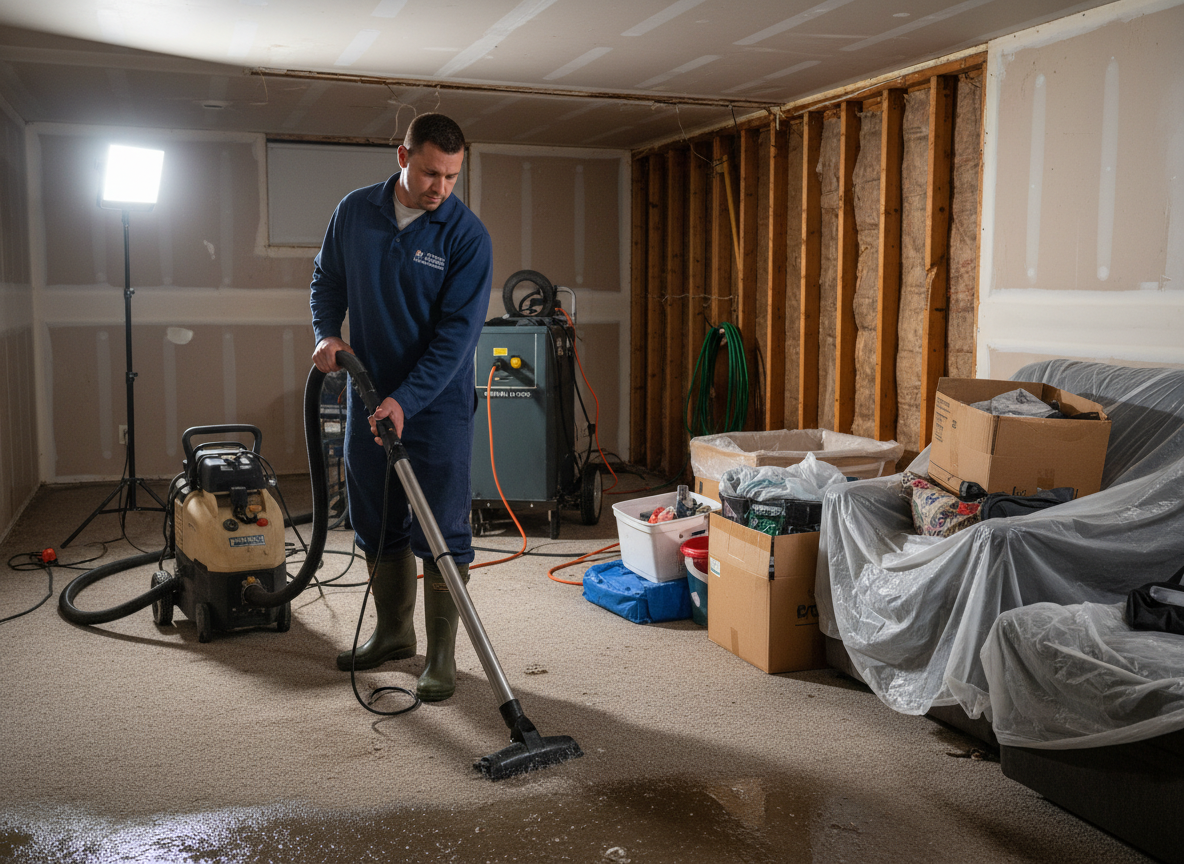
Sewer backup pushed water into a 1940s home basement during heavy spring rain. We found trapped moisture behind drywall and under the slab. Extraction and targeted drying prevented mold in the plaster walls. The homeowner returned to a dry, odor-free space within five days.
How it works
- 1
Initial Assessment
Technicians arrive within hours, map water migration using meters, and identify affected materials in basements and crawl spaces typical of Yonkers construction.
- 2
Water Extraction
Remove standing water with pumps and wands while protecting electrical systems common in pre-war homes along Tuckahoe Road.
- 3
Drying and Monitoring
Place equipment to pull moisture from walls and floors, checking readings daily until levels stabilize across all layers.
- 4
Sanitization and Containment
Apply treatments to prevent microbial growth and seal off work zones to protect remaining living areas.
Pricing
Upfront quotes provided after on-site inspection; final cost depends on square footage, depth of water, and materials affected.