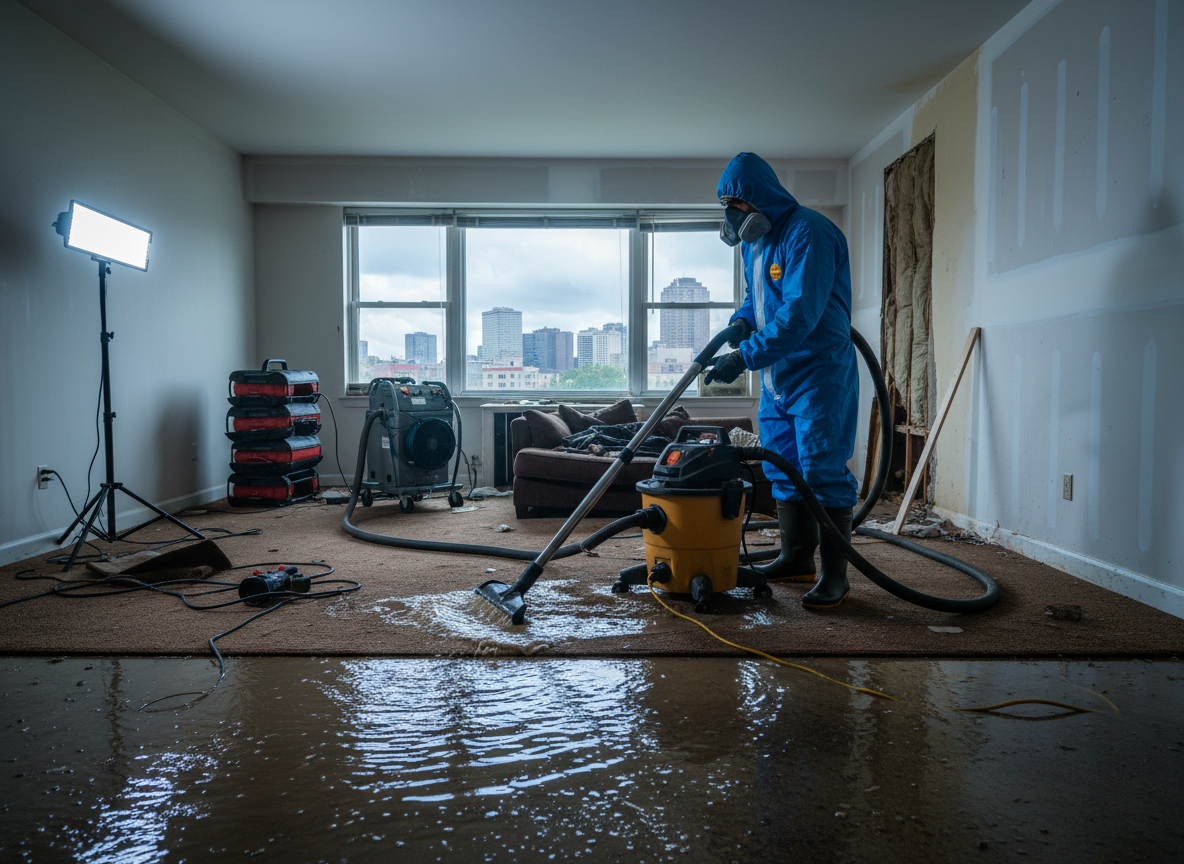
Yonkers housing stock includes many pre-war homes with lath-and-plaster walls and fieldstone foundations that trap water differently than modern drywall. When a pipe bursts or a nor'easter drops several inches of rain, moisture travels along joists into adjacent rooms and up into finished spaces above. Technicians must map hidden saturation with moisture meters rather than relying on visible signs, because plaster can hold water for weeks before showing damage on the surface. Failure to address the full footprint often leads to recurring musty odors once temperatures drop in late fall.
The Saw Mill River corridor and low-lying streets near the Bronx line see frequent sewer backups during heavy spring rains because older combined storm and sanitary lines cannot handle the volume. In these situations, gray water requires containment barriers and HEPA air scrubbers from the first hour to limit cross-contamination into living areas. Crews also watch for hidden voids under concrete slabs common in 1950s-1960s split-levels along Tuckahoe Road, where water can pool undetected and later migrate into finished basements after the visible cleanup appears complete.
Westchester County humidity levels stay elevated through summer, slowing natural evaporation and raising the risk of microbial growth within 48 hours on organic materials. Emergency protocols therefore include rapid removal of saturated carpet padding and baseboard sections, followed by targeted drying with air movers directed at wall cavities rather than open rooms. Homeowners who attempt their own cleanup with box fans often push moisture deeper into insulation, turning a one-day extraction job into a multi-room remediation project once the walls are opened.
Technician insight
In Yonkers, the thing that catches most people out with Emergency water cleanup is water traveling behind original plaster in pre-1940 homes near the Saw Mill River. Homeowners stop at the wet carpet and miss the moisture that has wicked up six inches into the wall cavity; once temperatures fall, that hidden dampness turns into a musty smell that forces us to open more wall than anyone expected.
Crestwood Basement After Heavy Rain
A homeowner on a side street off Central Avenue called after three inches of rain sent water through the basement bulkhead. We found the water had reached the finished side and wicked into the horsehair plaster on the shared wall with the laundry room. Extraction and targeted drying of the cavities prevented mold growth and kept the job to drying only rather than full wall replacement.
How it works
- 1
Emergency Dispatch
Call routes to the 465 Tuckahoe Road location for immediate crew deployment, day or night, with equipment staged for Yonkers terrain and older housing layouts.
- 2
On-Site Assessment
Technicians document water source, affected materials, and migration paths using moisture meters before any extraction begins.
- 3
Water Extraction
Submersible pumps and truck-mounted units remove standing water from basements and crawl spaces common in Yonkers neighborhoods.
- 4
Drying And Monitoring
Air movers, dehumidifiers, and daily moisture readings continue until affected plaster and framing reach acceptable levels.
Pricing
Upfront quotes after inspection; final cost depends on water volume, affected square footage, and whether hidden cavities require opening.