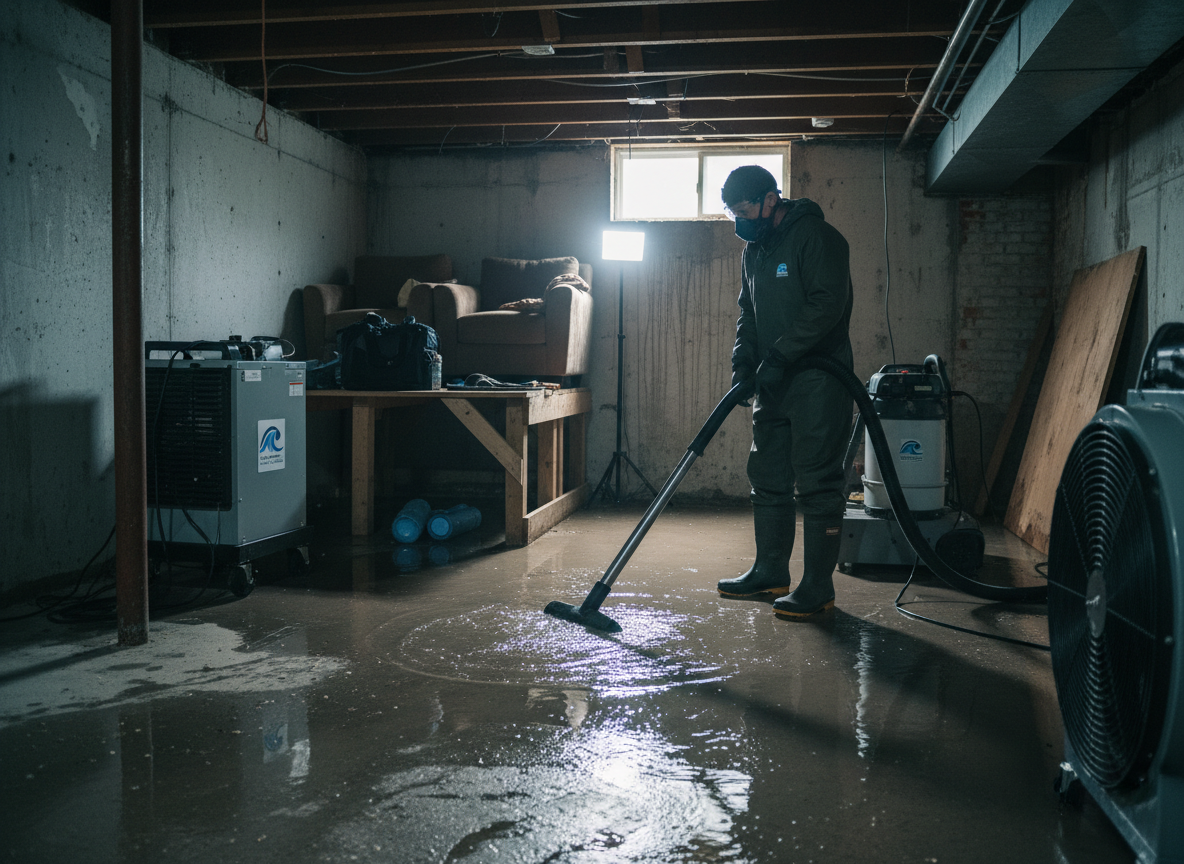
Yonkers homes built before 1960 often feature stone or concrete basements with minimal drainage, especially along Tuckahoe Road and near the Saw Mill River. When heavy summer rains or rapid snow melt occur, water enters through foundation cracks and floor joints faster than standard shop vacs can handle. Professional extraction uses truck-mounted pumps rated for hundreds of gallons per minute to pull standing water before it saturates subflooring or migrates into adjacent finished spaces.
Once bulk water is removed, hidden pockets remain in plaster-and-lath walls and under tongue-and-groove flooring common in pre-war stock. Moisture meters and infrared cameras locate these zones so that wall cavities can be opened and dried without unnecessary demolition. Skipping this step leads to recurring mold growth weeks later, particularly in the humid conditions that follow Yonkers thunderstorms.
Extraction timing matters because Yonkers sits in a freeze-thaw zone. Water left in slab cracks during winter expands and widens fissures, turning a one-time leak into structural repair. Crews work 24/7 from the Tuckahoe Road base to reach jobs before temperatures drop and lock residual moisture in place.
Technician insight
In Yonkers, the thing that catches most people out with water extraction is how quickly water travels under the wide oak flooring in 1920s–1940s homes near Tuckahoe Road. Once it reaches the dirt sub-base, standard pumps miss it and the floor buckles days later when the ground stays saturated from Hudson Valley rain patterns.
Tuckahoe Road Basement After Summer Storm
Heavy rain overwhelmed the rear yard grading and water entered through a 1948 foundation crack. Standing water reached eight inches across the concrete floor and wicked into the bottom course of plaster walls. Extraction removed the bulk volume in under two hours, followed by cavity drying that prevented mold in the lath. The homeowner avoided full wall replacement.
How it works
- 1
On-Site Assessment
Technicians arrive within hours, measure water depth, identify entry points, and map affected materials in the specific home construction.
- 2
Bulk Water Removal
Truck-mounted pumps and portable extractors pull standing water from floors, sumps, and low areas while protecting unaffected rooms.
- 3
Targeted Cavity Extraction
Baseboards and selected wall sections are opened to reach trapped water behind plaster or paneling before drying begins.
- 4
Moisture Verification
Readings confirm that remaining moisture levels allow safe drying equipment placement without risk of hidden saturation.
Pricing
Upfront quotes provided after inspection; cost varies by water volume, depth, and access to hidden cavities in older Yonkers construction.