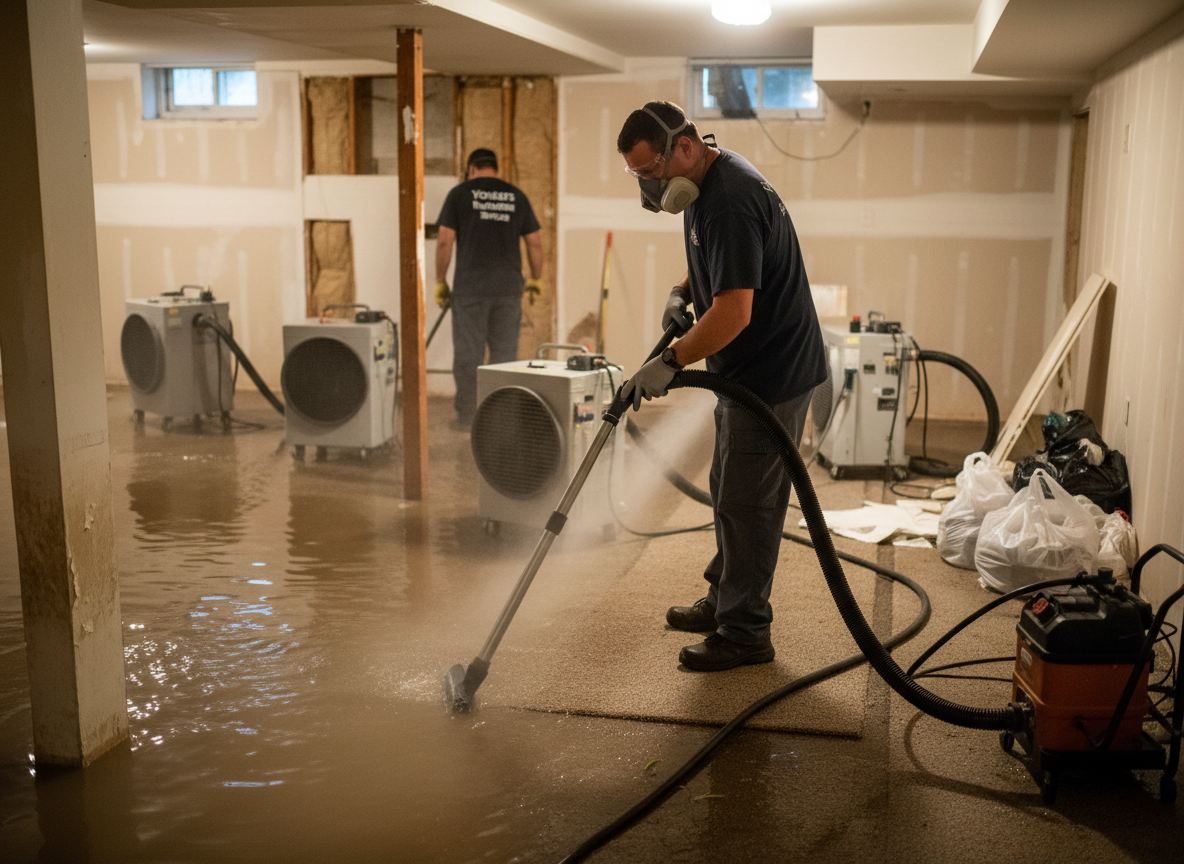
Yonkers homes built before 1960 often feature plaster walls over lath and unfinished basements that trap moisture after leaks or storms. Water travels along the stone foundations common along the Saw Mill River corridor, reaching joists and subfloors before homeowners notice. Extraction must account for these hidden paths or mold returns within weeks. Technicians at Safesurge Repair start with moisture mapping using meters calibrated for older masonry and wood rather than modern drywall assemblies.
Heavy spring rains combined with poor grading on many Tuckahoe Road properties push water against foundation walls. Sump pumps fail when power is lost during nor'easters, allowing several inches of standing water to remain for days. Drying equipment placement differs here because low ceilings in 1920s bungalows limit airflow; industrial air movers must be angled precisely to avoid pushing moisture into adjacent rooms. Delaying service increases the chance that hardwood floors cup permanently.
Seasonal Guidance
Winter freeze-thaw cycles in Yonkers burst pipes in unheated crawl spaces under raised ranches. Ice expands, then melts into insulation and sill plates. Restoration crews remove wet fiberglass batts quickly because they hold water against rim joists and create hidden rot. Summer humidity slows evaporation, requiring longer dehumidifier run times than in drier inland counties.
Edge Cases
Sewage backups from combined sewer lines in South Yonkers neighborhoods require full containment and disposal protocols different from clean water events. Owners often mistake the odor for simple drain clogs until gray water reaches living areas. Prompt containment prevents cross-contamination into HVAC returns common in split-level homes.
Technician insight
In Yonkers the thing that catches most people out with water damage restoration near me is how quickly moisture travels behind the plaster in pre-war homes along the river valleys. You pull baseboards and the drywall looks dry, but the lath behind it is still holding water because the stone foundations here wick upward for weeks after a storm.
Basement Leak After Spring Rain
Water entered a 1940s Yonkers split-level through a cracked foundation wall during a three-day rain. We found moisture had wicked two feet up into the plaster and reached the underside of the first-floor subfloor. Extraction and targeted drying prevented mold in the joist bays; the homeowner reopened the space after two weeks with no further issues.
How it works
- 1
Arrival and Assessment
Technician arrives within hours, documents moisture levels room by room, and identifies migration paths through Yonkers foundation types.
- 2
Water Extraction
Standing water is removed using truck-mounted pumps suited for basement depths typical in the area.
- 3
Drying and Monitoring
Air movers and dehumidifiers are positioned for older plaster and wood construction; daily moisture checks continue until readings stabilize.
- 4
Sanitizing and Restoration
Affected materials are treated, removed if necessary, and the space is prepared for repairs.
Pricing
Upfront quotes provided after on-site inspection; final cost depends on water volume, affected materials, and drying duration.