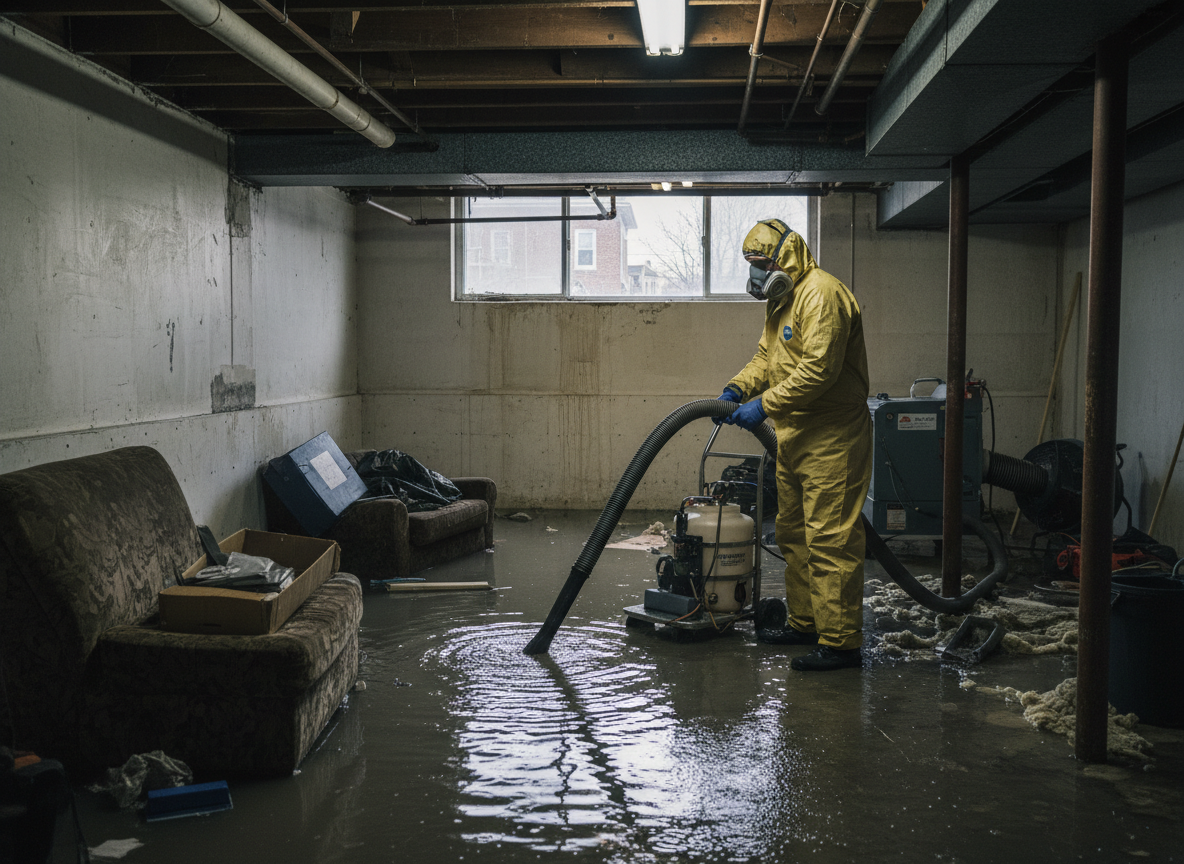
Yonkers homes built before 1960 often feature plaster walls over lath and clay-heavy soil that holds water against foundations. When a pipe bursts or heavy rain overwhelms a sump, moisture travels laterally into crawlspaces and under finished basements common in Park Hill and Lincoln Park. Technicians must pull baseboards early and use moisture meters on both sides of walls because hidden saturation behind horsehair plaster leads to mold within 48 hours once temperatures rise above freezing.
Winter freezes along the Saw Mill River corridor crack older cast-iron lines in homes near Tuckahoe Road, while summer thunderstorms drop several inches in an hour on already saturated ground. Water cleanup crews stage equipment on the street because narrow driveways in East Yonkers limit access for large dehumidifiers. Category 3 water from street flooding requires full containment and HEPA air scrubbing before any drying begins to avoid cross-contamination into living spaces.
After extraction, crews run commercial air movers and dehumidifiers for three to five days while monitoring wood moisture content below 12 percent. In split-level homes common near the Bronx border, water migrates between floors through HVAC returns, requiring separate drying zones. Skipping this step leaves residual moisture that warps hardwood floors during the next heating season.
Technician insight
In Yonkers, the thing that catches most people out with Water cleanup services is how quickly water travels through the clay soil and into the half-basements of pre-war homes near the Hudson. Homeowners often stop at the visible puddle and miss saturation behind plaster in the utility room, which then feeds mold once the heat kicks on.
Crawlspace Flood After Heavy Rain
Water entered a 1920s home in Getty Square through the foundation during a summer storm. We found standing water under the floor joists and elevated moisture in the subfloor. Extraction followed by targeted drying prevented rot in the original timbers.
How it works
- 1
On-Site Assessment
Technicians arrive within hours, identify water category, map affected rooms, and document moisture levels with meters.
- 2
Water Extraction
Submersible pumps and truck-mounted vacuums remove standing water from floors, carpets, and crawlspaces.
- 3
Drying and Dehumidification
Air movers and commercial dehumidifiers run continuously while moisture readings are tracked daily.
- 4
Final Verification
Walls, floors, and cavities are rechecked; equipment is removed only after all materials reach dry standards.
Pricing
Upfront quotes provided after inspection; final cost depends on water category, square footage, and number of affected levels.