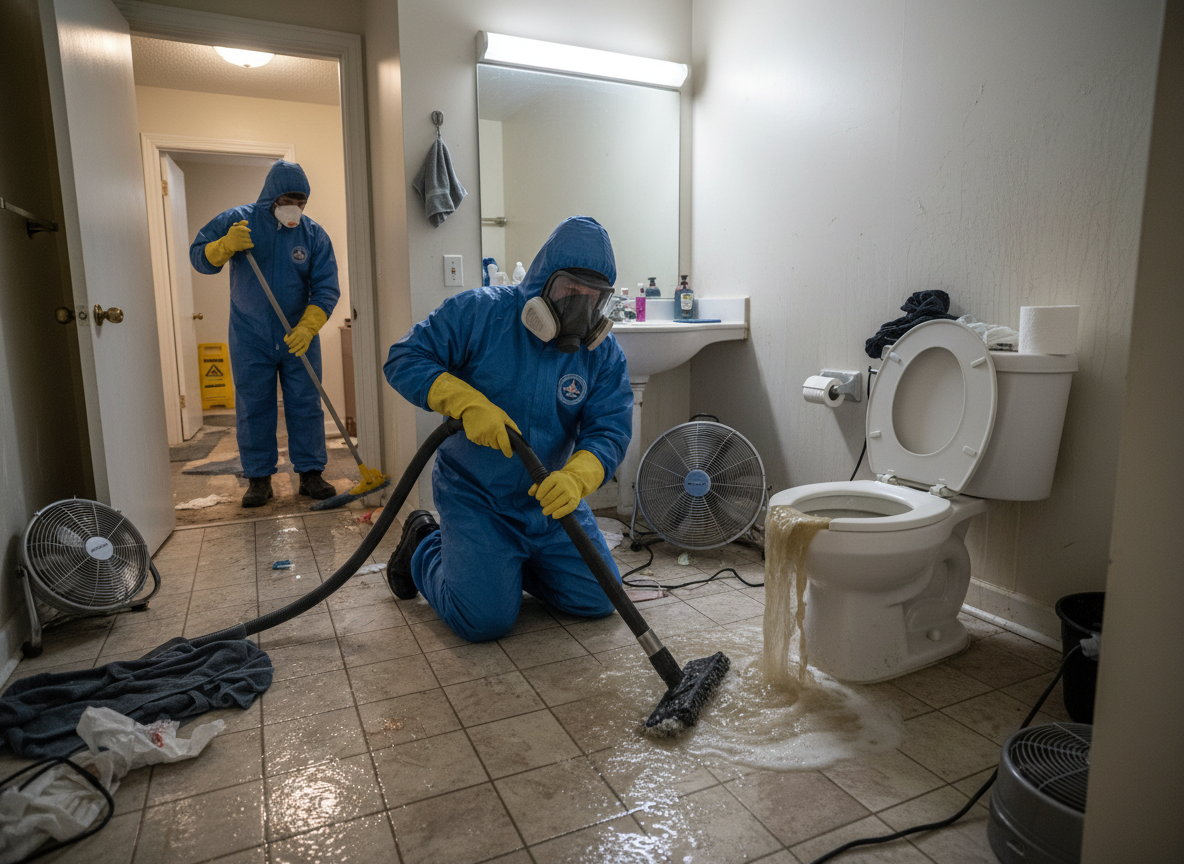
Toilet overflows in Yonkers often involve older cast-iron or galvanized lines common in homes built before 1970 along corridors like Tuckahoe Road. Water can travel under tile or hardwood into subfloors and joists before surfacing, especially when heavy rains raise local water tables in low-lying Westchester pockets. Technicians must pull baseboards early, check for trapped moisture behind vanities, and use moisture meters on drywall because visible puddles rarely show the full extent of saturation in these older builds.
Extraction starts with submersible pumps rated for wastewater, followed by antimicrobial rinses on affected surfaces. In Yonkers properties with slab-on-grade construction near the Bronx border, crews often lift sections of flooring to reach trapped water that would otherwise wick upward and trigger mold within 48 hours. Proper disposal of contaminated carpet pad and base materials follows EPA wastewater guidelines, and negative-air machines run until readings drop below 15 percent moisture content on both wood and drywall.
Homeowners sometimes attempt their own cleanup with shop vacuums, which spreads bacteria and leaves hidden moisture that later causes structural rot. Professional crews document every step for insurance and use thermal imaging to locate water that has migrated into wall cavities or under cabinets, common in the dense housing stock around Getty Square and Lincoln Park. Drying times average three to five days depending on humidity levels that spike after summer storms in the Hudson Valley.
Technician insight
In Yonkers, the thing that catches most people out with Toilet overflow cleanup is how quickly water travels under the wide oak floors common in pre-war homes along Tuckahoe Road; once it reaches the crawl space or slab edge, homeowners think the job is done but hidden moisture stays and grows mold within days.
Overflow Behind Vanity in North Yonkers
Water from a second-floor toilet reached the first-floor ceiling and traveled into a plaster wall cavity. Inspection showed saturation extending two feet past the visible stain into the original lath. Crews opened the wall, extracted water, treated the cavity, and dried the structure over four days, preventing mold spread into the adjacent bedroom.
How it works
- 1
Initial Assessment
Technician arrives within hours, maps water migration using meters and thermal cameras, and identifies affected materials in the specific Yonkers home layout.
- 2
Water Extraction
Wastewater is pumped out, followed by removal of saturated padding, carpet, or flooring sections that cannot be salvaged.
- 3
Cleaning And Sanitizing
All surfaces receive EPA-registered disinfectants, with special attention to porous materials and seams where bacteria hide.
- 4
Drying And Monitoring
Air movers and dehumidifiers run until moisture readings stabilize, with daily checks to prevent secondary damage.
Pricing
Cost depends on square footage affected, depth of water migration into subfloors, and whether contents require separate handling; upfront quotes provided after inspection.