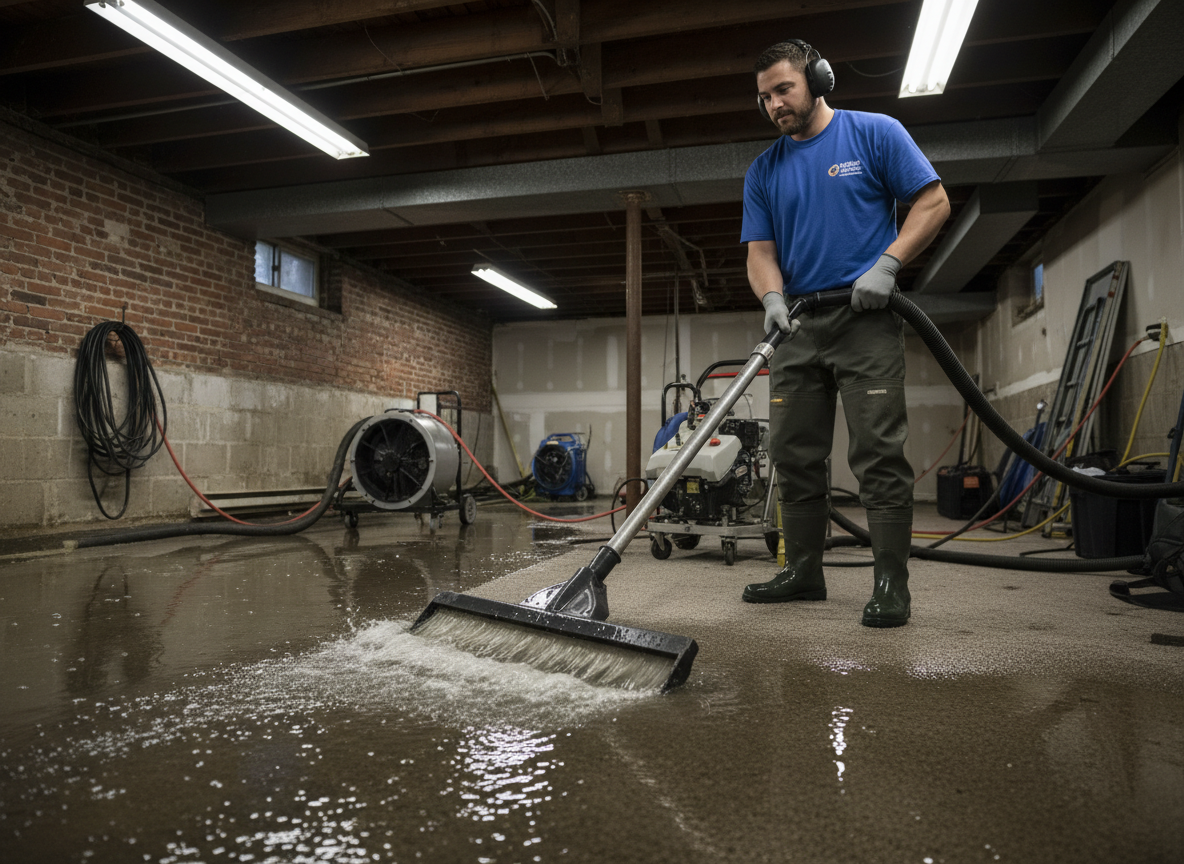
Rapid water extraction starts the moment water contacts flooring or walls in Yonkers homes. Older brick and frame houses along Tuckahoe Road and the Saw Mill River corridor often have plaster over lath or early slab foundations that trap moisture quickly. Portable extraction units with high-CFM vacuums pull standing water from hardwood, tile, and carpet before it migrates into subfloors or behind baseboards. Technicians also use moisture meters on site to map how far water has traveled under cabinets or into HVAC returns common in split-level homes built in the 1960s and 1970s.
Winter freezes along the Hudson and heavy spring rains frequently cause supply-line ruptures in unheated crawl spaces throughout northwest Yonkers. Extraction must account for the slope of local lots that directs runoff toward foundations. Crews stage equipment at street level when driveways are steep, then carry hoses and pumps down exterior stairs to reach lower-level family rooms. Removing water within the first hours limits warping of original oak floors and reduces the risk of hidden saturation in horsehair plaster walls that line many pre-war properties near Getty Square.
After bulk water is gone, air movers and dehumidifiers are positioned to dry the remaining moisture trapped in Yonkers’ dense masonry walls. Technicians document every step with photos for insurance adjusters who handle claims from Mount Vernon and Bronx border addresses. Leaving even small pockets of water behind leads to musty odors that travel through shared walls in attached homes along Central Avenue. Proper extraction also protects electrical boxes and low-voltage wiring that run close to slab edges in ranch-style houses common on the east side of town.
Technician insight
In Yonkers, the thing that catches most people out with Rapid water extraction is how water travels under the slab in pre-1970 homes near Tuckahoe Road. Clay soil and poor grading send runoff straight into the foundation footer, so standing water in the basement is only the start; without pulling from under the concrete you still have a mold problem six weeks later.
Burst Supply Line in Lower-Level Apartment
A cold-water line split overnight in a 1960s ranch off Central Avenue. Water reached the finished basement and traveled under the slab toward the shared wall with the neighbor. Extraction units removed the standing water, then perimeter drains pulled moisture from beneath the concrete. Follow-up drying prevented damage to the adjacent unit and kept the claim contained to one property.
How it works
- 1
Arrival and Safety Check
Technicians arrive within hours, shut off water at the main, and assess electrical risks before starting pumps.
- 2
Standing Water Removal
High-volume extractors pull water from floors and low areas, routing discharge to exterior drains or trucks.
- 3
Moisture Mapping
Infrared cameras and meters locate hidden saturation in walls, subfloors, and behind cabinets.
- 4
Initial Drying Setup
Air movers and dehumidifiers are placed to begin evaporation while extraction equipment is packed.
Pricing
Cost depends on volume of water, number of affected levels, and whether hidden moisture requires extra equipment; written estimates provided on site.