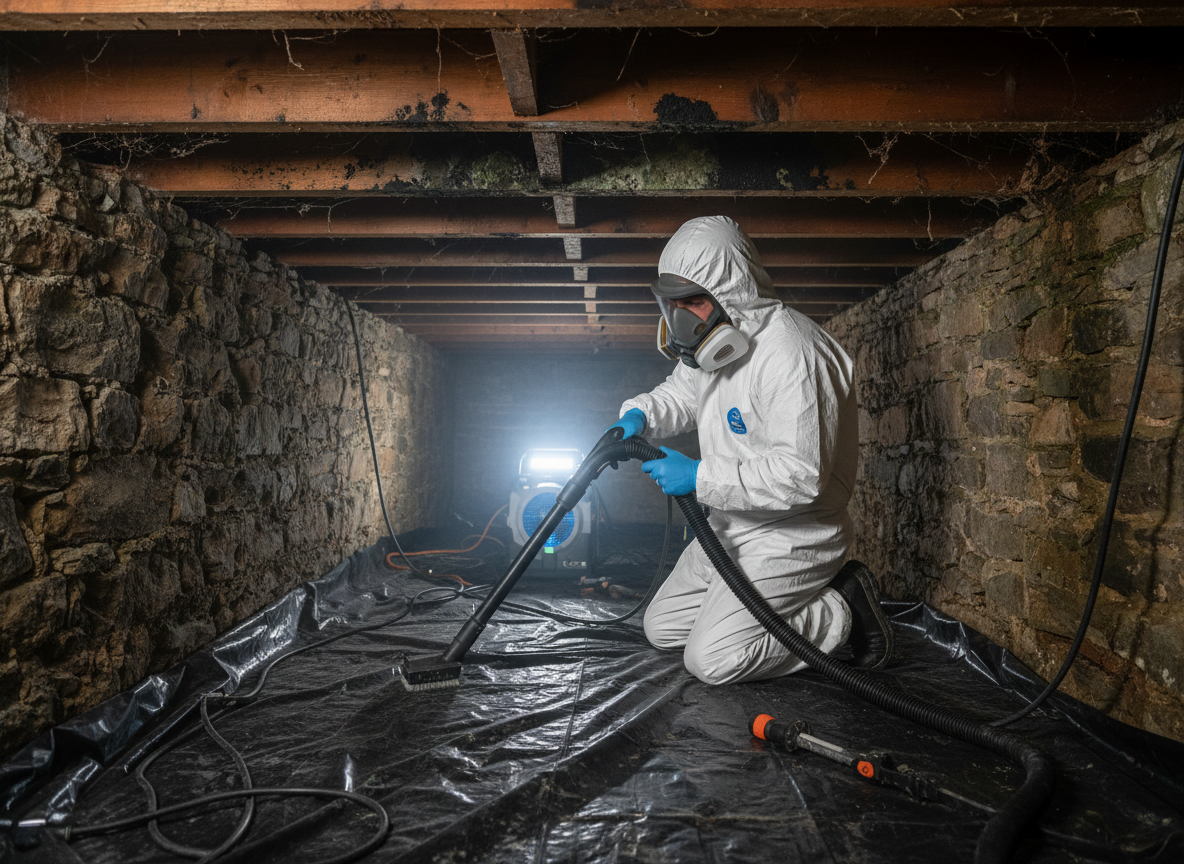
Yonkers homes built before the 1960s often sit on fieldstone or rubble foundations that allow soil moisture to migrate upward, especially in neighborhoods near the Saw Mill River or close to the Hudson. Crawl spaces in these structures frequently lack proper vapor barriers, so warm summer air meeting cool ground creates condensation that feeds mold on joists and insulation. Removing visible growth without sealing the dirt floor and improving airflow simply lets colonies return after the next heavy rain or winter thaw.
Access is rarely straightforward in Westchester County crawl spaces. Low clearance, abandoned ductwork, and knob-and-tube wiring left from earlier decades complicate containment and require careful disassembly before any remediation begins. Technicians must map every moisture source, including gutter runoff that pools against the foundation on sloped lots common in areas like Bryn Mawr and Colonial Heights, then install sealed encapsulation systems that tie into existing sump pumps to keep relative humidity below 55 percent year-round.
Code compliance matters when work crosses into living spaces. Yonkers building inspectors expect proper disposal of contaminated materials and documentation that no mold remains on structural members before insulation or flooring is replaced. Skipping these steps can delay resale or trigger additional visits from the city’s housing department.
Seasonal Moisture Patterns in Yonkers Crawl Spaces
Heavy spring snowmelt and summer thunderstorms raise the water table along the river corridor, pushing humidity into crawl spaces that were never designed with modern drainage. Homeowners often notice musty odors strongest in September after months of warm, moist air has circulated unchecked.
Technician insight
In Yonkers, the thing that catches most people out with crawl space mold removal is how often 1920s–1940s fieldstone foundations along Tuckahoe Road and Crestwood wick water from the clay-heavy soil, especially after winter snow load melts and saturates the ground before gutters can handle it.
Crestwood Crawl Space After Spring Thaw
A 1948 Cape in Crestwood showed black growth on floor joists after March meltwater pooled against the stone foundation. We found saturated insulation and elevated humidity from an unsealed dirt floor. After removing affected materials, installing a sealed liner, and tying a small dehumidifier into the existing sump, readings stayed under 50 percent and the musty smell disappeared.
How it works
- 1
Initial Assessment
Technician enters the crawl space from the Tuckahoe Road address to document moisture readings, visible growth, and structural access points.
- 2
Containment Setup
Plastic sheeting and negative air machines isolate the work area so spores do not migrate into living spaces above.
- 3
Material Removal
Affected insulation, wood, and debris are bagged and removed while preserving wiring and pipes common in older Yonkers homes.
- 4
Drying and Treatment
Industrial dehumidifiers and EPA-registered antimicrobials address remaining surfaces before a vapor barrier is installed.
- 5
Final Verification
Post-remediation moisture checks confirm levels stay below thresholds that allow regrowth in Westchester County conditions.
Pricing
Pricing depends on crawl space size, depth of growth, and whether encapsulation is added after removal.