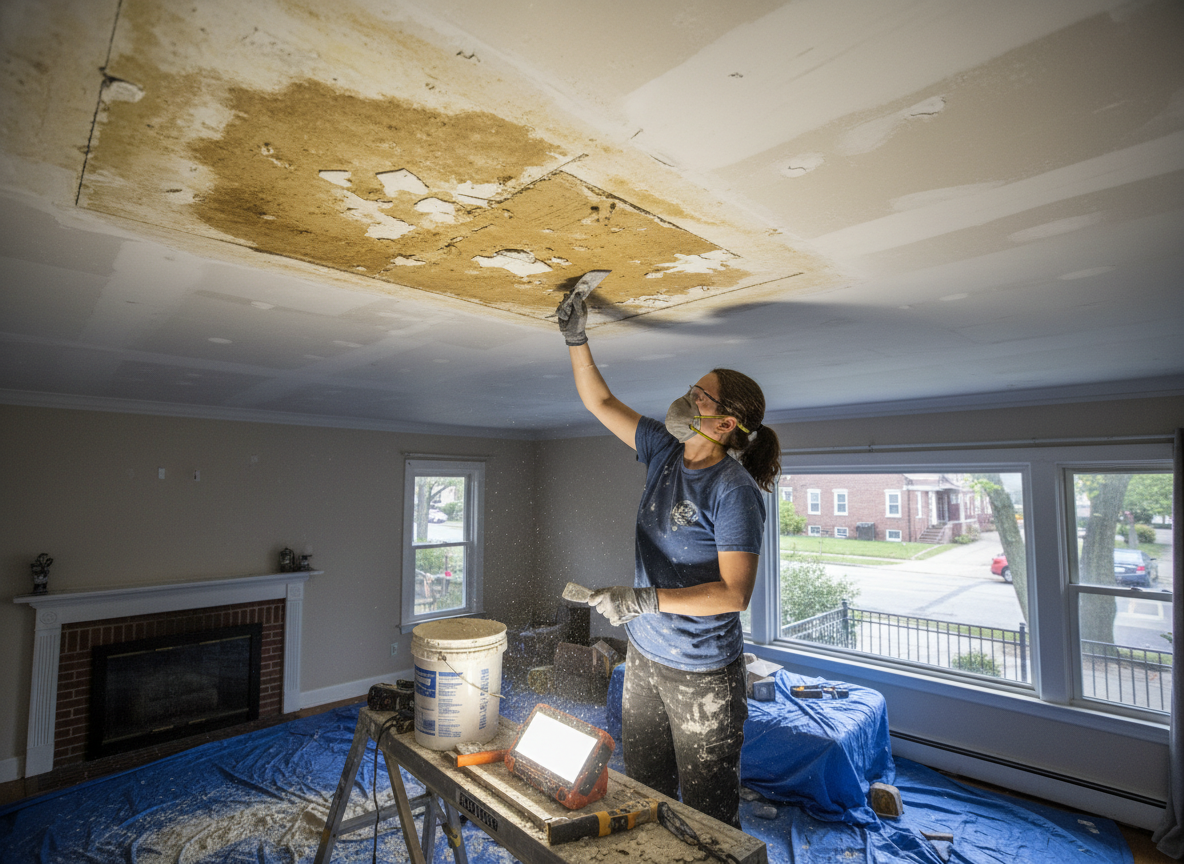
Yonkers homes built before the 1960s often feature lath-and-plaster ceilings that let water migrate along the wood strips before any stain appears on the surface. When a roof leak or pipe burst occurs, technicians must open multiple sections to trace the full path rather than assuming the visible spot is the only damage. Winter freezes along Tuckahoe Road and surrounding hills increase the frequency of these events because older supply lines run through unheated attic spaces.
Drying must account for the dense plaster and narrow joist bays that trap moisture longer than modern drywall. Industrial air movers and dehumidifiers are placed to pull air through the cavities, and moisture meters check both the plaster and the wood framing behind it. Failure to reach hidden pockets leads to mold growth that later requires full ceiling removal.
After drying, repairs follow local building practices for older structures: new plaster is skimmed to match existing textures, and seams are feathered to avoid visible lines. In multi-family buildings common near the Saw Mill River Parkway, work is coordinated with upstairs units to prevent repeat leaks from shared piping.
Homeowners sometimes attempt spot painting without addressing the source, which only hides the problem until it spreads to adjacent rooms or floors below.
Technician insight
In Yonkers, the thing that catches most people out with Ceiling water damage repair is how water travels along the lath in pre-1960 plaster ceilings common in neighborhoods off Tuckahoe Road; homeowners see one stain and assume that is the full extent, but the real damage often runs several feet in both directions along the joists.
Ceiling leak from upstairs bathroom in a Yonkers two-family home
Water from a slow drain leak had traveled along plaster lath into the dining room below. Inspection showed the wet area extended two joist bays past the visible stain. Crew opened the ceiling, dried the cavities over three days, then skimmed new plaster to match the original texture so no seam remained visible.
How it works
- 1
On-site inspection
Technicians arrive within hours, use moisture meters and thermal imaging to map water travel through plaster and joists, and identify the leak source in the attic or upstairs unit.
- 2
Water containment and extraction
Affected areas are isolated, standing water is removed, and temporary barriers protect unaffected rooms in the Yonkers property.
- 3
Drying and monitoring
Equipment is positioned to dry cavities behind plaster; daily readings confirm moisture levels drop below thresholds that support mold.
- 4
Ceiling repair and finish
Damaged sections are replaced or patched with matching plaster, textured, and painted to blend with the original ceiling.
Pricing
Pricing depends on the square footage affected, access to the leak source, and whether multiple ceiling layers must be opened.