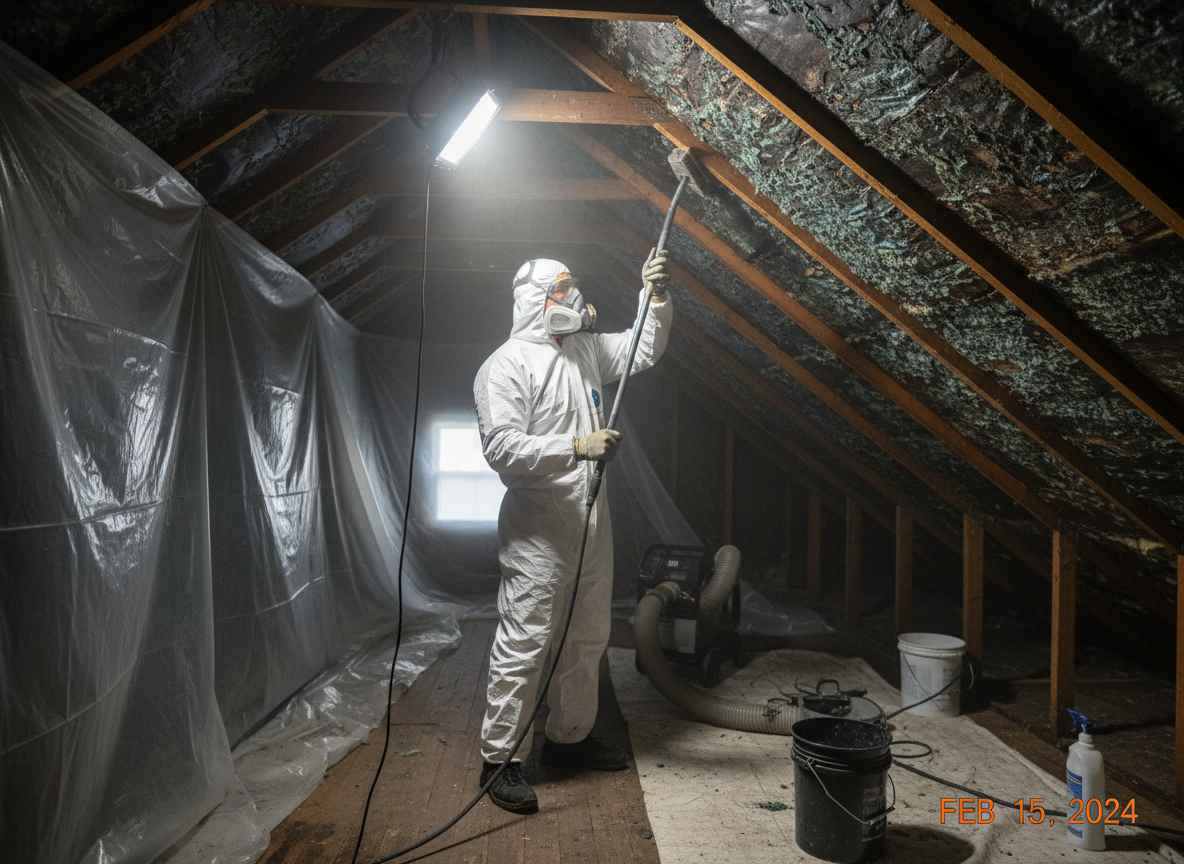
Yonkers attics in pre-1960 housing stock along the Saw Mill River Parkway corridor and older sections near Getty Square often show mold after ice-dam leaks or flashing failures around chimneys. We start by mapping moisture with infrared and pin meters, then isolate the affected bays with 6-mil poly and negative air before any removal. Cellulose or fiberglass that has been wet for more than 48 hours is bagged on site; rafters and sheathing are HEPA-vacuumed and treated with EPA-registered antimicrobials only where staining persists. Homeowners frequently discover the issue only after ceiling stains appear downstairs because many of these homes have limited soffit venting and blocked ridge vents from decades of debris.
Edge cases include mold that has crossed into wall cavities through knob-and-tube wiring holes or around plumbing vents. We pull only the minimal drywall or plaster needed for access rather than gutting entire ceilings. In two-story colonials common on Tuckahoe Road, we stage containment from the attic hatch downward to keep spores out of finished rooms. After removal we run commercial air movers and dehumidifiers until wood moisture content reads below 12 percent, then replace insulation with new material that meets current R-value codes for Westchester winters. Every job ends with a written moisture-source report so the homeowner can address roof or gutter repairs before winter freeze-thaw cycles return.
Ventilation upgrades are often required because original 1950s attics were not designed for today’s higher indoor humidity loads from modern bathrooms and kitchens below. We install additional soffit and ridge vents or powered units when passive flow is insufficient. Homeowners are advised against simply spraying bleach on rafters; the underlying moisture must be eliminated or the mold returns within a season. All debris leaves the property the same day and is disposed of as construction waste.
Technician insight
In Yonkers the thing that catches most people out with attic mold remediation is ice dams along the north-facing slopes of older slate roofs. The melt water backs up under the shingles, soaks the sheathing for weeks, and the mold grows outward from the eaves where homeowners never look until it drops into second-floor ceilings.
Ice-Dam Leak In North Yonkers Colonial
A homeowner on a side street off Central Avenue noticed brown stains on a second-floor ceiling after a January thaw. We found active moisture along the north eaves where an ice dam had formed on the original slate roof. After mapping and containing the attic we removed wet cellulose, cleaned the rafters, and added ridge venting. The space dried to target levels within four days and no further ceiling damage occurred.
How it works
- 1
Moisture Mapping And Containment
Infrared scan and moisture meter readings locate active leaks; plastic barriers and negative air machines isolate the attic from the rest of the Yonkers home.
- 2
Removal And Cleaning
Wet insulation is removed and bagged; rafters and sheathing are HEPA-vacuumed and treated only where growth is visible.
- 3
Drying And Verification
Commercial drying equipment runs until wood moisture content is below 12 percent; post-remediation readings confirm the space is dry.
- 4
Ventilation Correction
Soffit and ridge vents are added or cleared so future humidity cannot support new growth during Yonkers winters.
Pricing
Cost varies with square footage, depth of insulation, and whether wall cavities must be opened; we provide an upfront written scope after the inspection.